
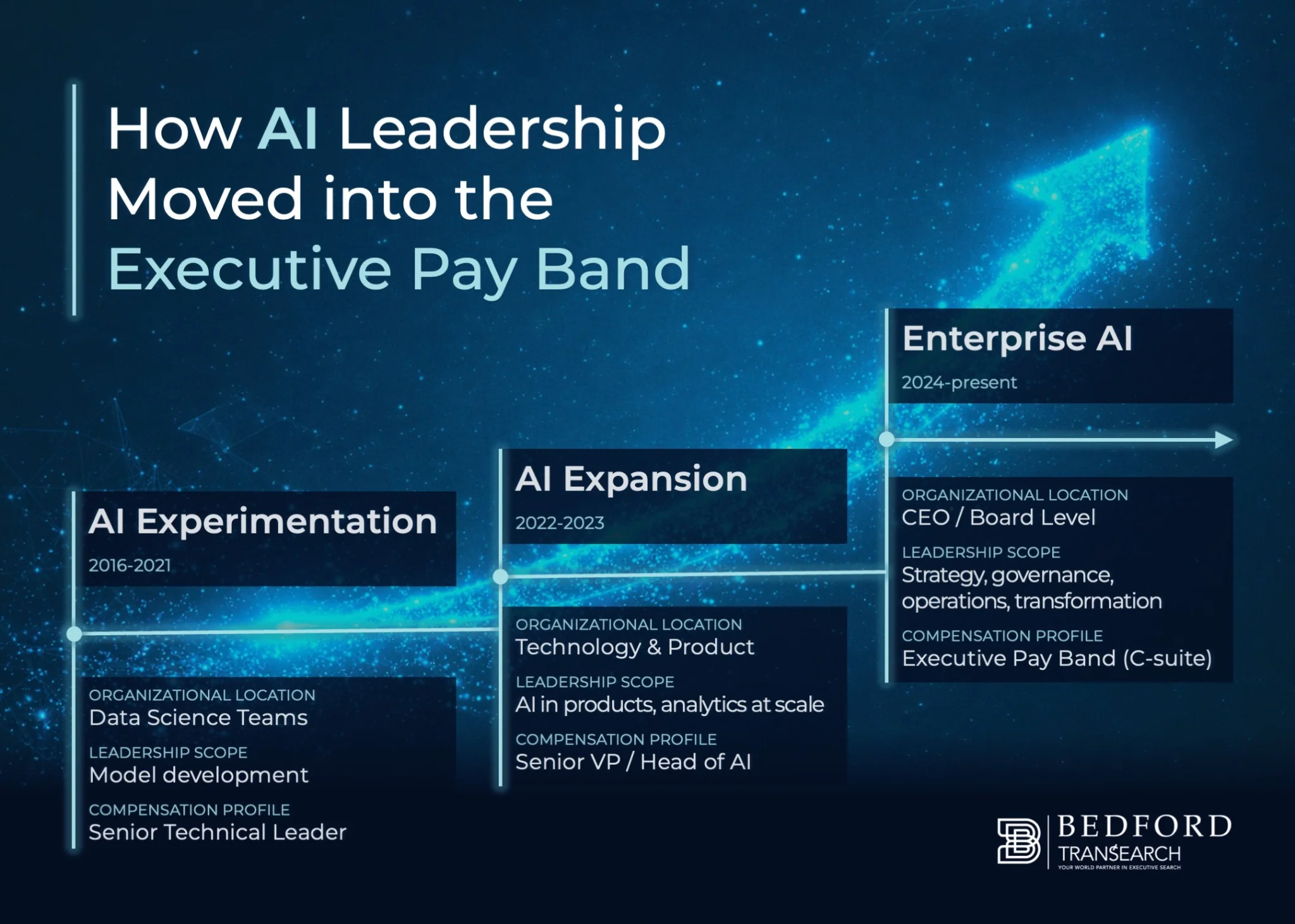
From specialist capability to enterprise mandate
As artificial intelligence has moved from research labs into the core of business operations, it has reshaped senior leadership. What was once a specialist function is now a defining element of corporate strategy, risk management, and competitive identity, elevating AI to the highest level of organizational decision making. Nearly three-quarters of CEOs describe themselves as the primary decision maker on AI, reflecting the need for a senior executive who can connect strategy, governance, operating model, and delivery across the organization. In many companies, that responsibility is consolidating in the CAIO role. Adoption has accelerated quickly, with more than a quarter of large enterprises now having a dedicated CAIO, more than double the share two years ago, and with 66% of executives expecting to have one within the next two years. This growth reflects a broader shift: AI leadership is no longer viewed as a technical specialty but as an enterprise capability requiring board-level accountability.Why AI leadership moved into the C-suite
Early initiatives typically sat under the CTO or data science teams, focused on experimentation, but the rise of generative AI in 2023 pushed AI into customer-facing products, automated decision-making, and core processes, expanding accountability well beyond technology delivery. As AI’s impact widened, so did expectations of leadership. Senior AI roles increasingly encompass governance, ethics, operating model design, talent strategy, and organizational change. Public-sector action reinforced this shift. In 2024, the US government required federal agencies to appoint designated AI leaders responsible for oversight and accountability. While specific to government, the signal was clear: AI leadership had become a formal governance role. The private sector followed quickly. Senior AI roles moved closer to the CEO and board, particularly in technology, professional services, retail, and financial services. Organizations across sectors introduced CAIO or equivalent roles to coordinate AI strategy at an enterprise level rather than leaving it fragmented.The evolution of executive roles and pay
In compensation terms, the critical variable is not title but mandate. AI leadership now resembles earlier waves of executive evolution. CIOs rose with enterprise IT. CDOs gained prominence with big data. CAIOs reflect the institutionalization of AI as a core business capability. That evolution is visible in pay, with some surveys citing the average total compensation for senior data analytics and AI executives in the United States at US$1.13 million, including annualized equity grants. The highest earners reported total compensation as high as US$2.6 million, placing senior AI leaders firmly within established executive compensation ranges.Look out for Bedford Group’s upcoming AI Compensation Report, grounded in actual disclosed executive pay and reflecting the real compensation structures, challenges, and performance metrics shaping AI leadership roles today.